
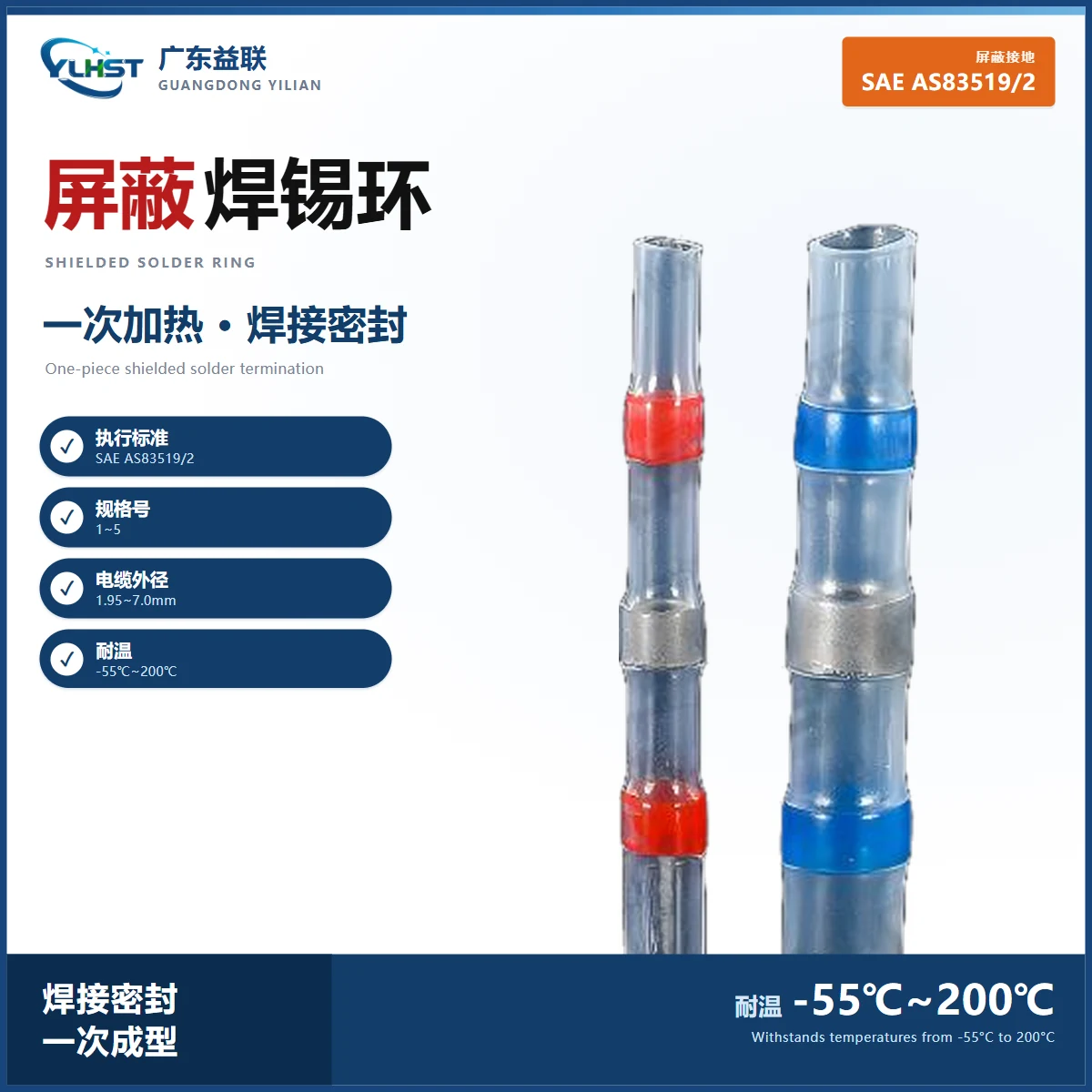
In a harness shop, shielded grounding is one of the highest-rework operations. Preparing the braid by hand, applying flux and controlling the soldering temperature all depend on operator skill: strands fray, flux goes on unevenly, temperature is hard to hold, and cold or dry joints and oxidised pads follow. With no strain relief after soldering, the joint cracks when the harness is bent or pulled — and the EMC failure only shows up at vehicle test, by which time the rework cost and the lost schedule are already booked.
New-energy vehicle, special-equipment and aerospace harness programmes are strict about the consistency and long-term reliability of shield grounding. Hand soldering struggles to deliver uniform joint quality lot after lot, and struggles to demonstrate compliance with specifications such as SAE AS83519/2.
Three temperature series cover the range
The YJSO family is divided by continuous operating temperature and insulation material, so selection follows the duty:
- YJSO63 — −55 °C to 150 °C, polyvinylidene fluoride insulation. Suited to conventional automotive shielded harnesses.
- YJSO175 — −55 °C to 175 °C, polyvinylidene fluoride insulation. For mid- and high-temperature zones around the engine.
- YJSO200 — −55 °C to 200 °C, fluoropolymer insulation. For high-temperature special harnesses and demanding aerospace positions.
The parts are positioned against imported shielded-grounding terminals of the same type and meet SAE AS83519/2, giving a domestic alternative for this class of consumable. Cable outside diameters from 1.95 mm to 7.0 mm are covered, with versions without pre-installed leads, with leads in several lengths, and with braided-strap leads, to suit different gauges and grounding layouts.
What the process change delivers
- Less dependence on skill — no need for an experienced solderer; a short briefing is enough for standardised work.
- Lower rework — solder and flux are pre-measured, so cold joints, dry joints and frayed strands drop sharply, and lots are consistent.
- Stable EMC — sealing and strain relief together keep the joint from corroding or cracking, and shield-to-ground impedance stays stable.
- Throughput — a single-ended ground takes less time and fewer operations, improving line rhythm.
The foundation of harness EMC performance sits in every shield-grounding node. Often the root cause is not the wire or the braid but a termination process that cannot be controlled. A pre-fluxed solder ring turns an unstable hand-soldering operation into a repeatable, inspectable heat-shrink step.
Where it fits in the harness
Used together with heat-shrink tubing and MS molded cable boots, the ring completes a domestic protection set that runs from branch protection and node sealing through to shield termination — one supply chain for the whole harness rather than a mix of imported consumables.
Before you qualify
Selection guidance here is engineering reference only. Matching an imported product is a starting point, not a qualification: before a project goes into production, complete sample sealing and environmental validation testing. All parameters are for selection reference, and engineering use requires sample verification.