
Specification tables are full of numbers like 105 °C, 125 °C, 135 °C, 200 °C and 260 °C. They are widely read as the temperature at which the tube shrinks. They are not. The rating is the continuous operating limit — the highest temperature at which the tubing still meets its insulation and mechanical requirements after long-term exposure.
What the rating measures
K125, for example, is rated −55 °C to 125 °C. It shrinks from about 84 °C and is fully recovered at about 110 °C, but it will work continuously at 125 °C. Reading the shrink temperature as the rating leads to under-specified parts.
Behind every rating is long-term heat ageing. Polyolefin oxidises, embrittles and cracks at high temperature; the industry verifies life by oven ageing samples and measuring the retention of tensile strength and elongation. GJB 7270-2011 and GB/T 7113.2 define the heat-ageing and heat-shock tests. A continuous rating is therefore a life-and-reliability figure, not a short-term peak.
Ratings, materials and typical parts
| Rating | Material | Typical part | Typical use |
|---|---|---|---|
| 105 °C | PVC | PVC tubing | Indoor electronics, low cost |
| 125 °C | Cross-linked polyolefin | K125 single wall | General internal wiring |
| 135 °C | Modified cross-linked polyolefin | K135 / DWL-1 / TM135 | Automotive, military, industrial control |
| 150 °C | Oil-resistant rubber | DR150 | Engine bay, fuel system |
| 175 °C | PVDF | KT175 | High temperature, chemical exposure |
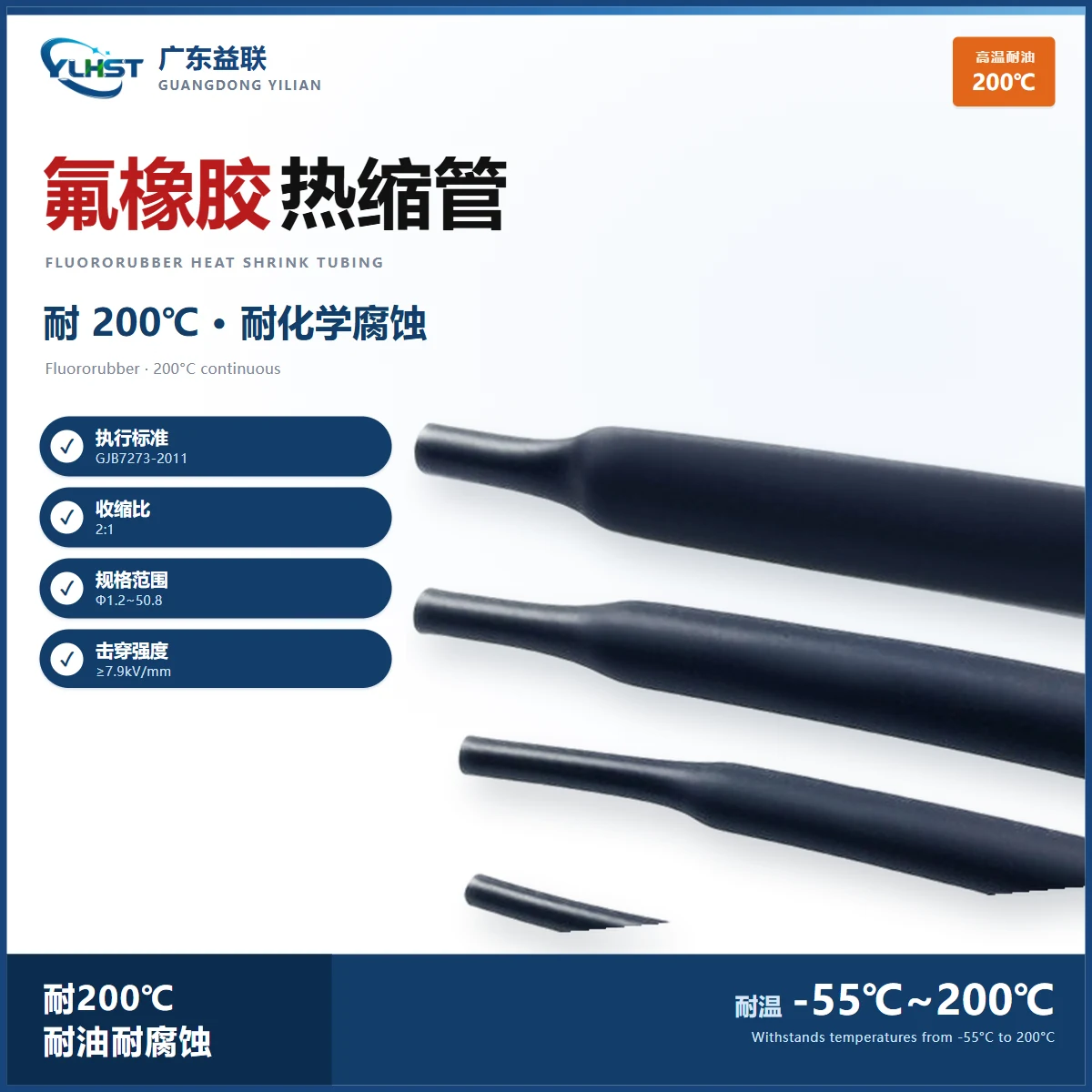
| 200 °C | Fluororubber / FEP | VT200 / FEP | Around engines, extreme heat |
| 260 °C | PTFE | PTFE tubing | Extreme heat, aggressive chemicals, semiconductor |
As the class rises, the polymer moves from polyolefin to PVDF, fluororubber and finally PTFE, and the price rises faster than the temperature. High-temperature grades also bring better oil, solvent and low-smoke performance, but specifying the highest class "to be safe" is rarely the right call.
Shrink temperature is not working temperature
DWL-1 shows the distinction clearly: operating range −55 °C to 135 °C, shrink start 80 °C, full recovery 110 °C. A hot-air gun at around 110 °C installs it; 135 °C is what it survives in service. The shrink temperature governs installation, the operating temperature governs service life.
How to choose the class
- Measure or estimate the hottest sustained ambient temperature and keep at least 20 °C of margin.
- Look at proximity to heat sources: engines, inverters and resistors call for 150 °C and above.
- Consider the medium: oil and solvents favour oil-resistant rubber or fluororubber rather than simply a higher temperature class.
- Check the programme requirements: GJB 7270-2011, IATF 16949 and customer specifications can set the class for you.
VT200 fluororubber tubing is rated to 200 °C, stays flexible and resists oil and solvents, which makes it a common choice around engines and in defence harnesses. When the requirement goes beyond that, the 260 °C PTFE class is the next step.
Higher is not automatically better
PTFE and fluororubber cost several times more than polyolefin, and PTFE needs a higher shrink temperature and special heating equipment, which adds process cost. If the real condition is 80–100 °C, a 200 °C part adds purchase and installation cost without adding reliability. Match the class to the measured environment with margin, and spend the budget on the property that is actually missing, such as sealing or oil resistance.