
Read a heat-shrink datasheet for the first time and two temperature numbers look like the same thing. They are not. Shrink temperature is the temperature reached during installation; working temperature is what the part may see for years afterwards. Confusing them leads to tubes that never fully recover, and to tubes scorched by someone trying to reach a number that was never an installation target.
What shrink temperature means
Shrink temperature describes the heat needed to start and complete recovery. It is an installation parameter with two parts.
The shrink-start temperature is where the tube visibly begins to contract; common polyolefin grades start around 70 °C. The full-recovery temperature is where the tube has fully contracted onto the substrate; for common polyolefin that is generally around 110 °C, though it varies with compound and wall thickness. Both numbers belong to the installation step, not to service.
What working temperature means
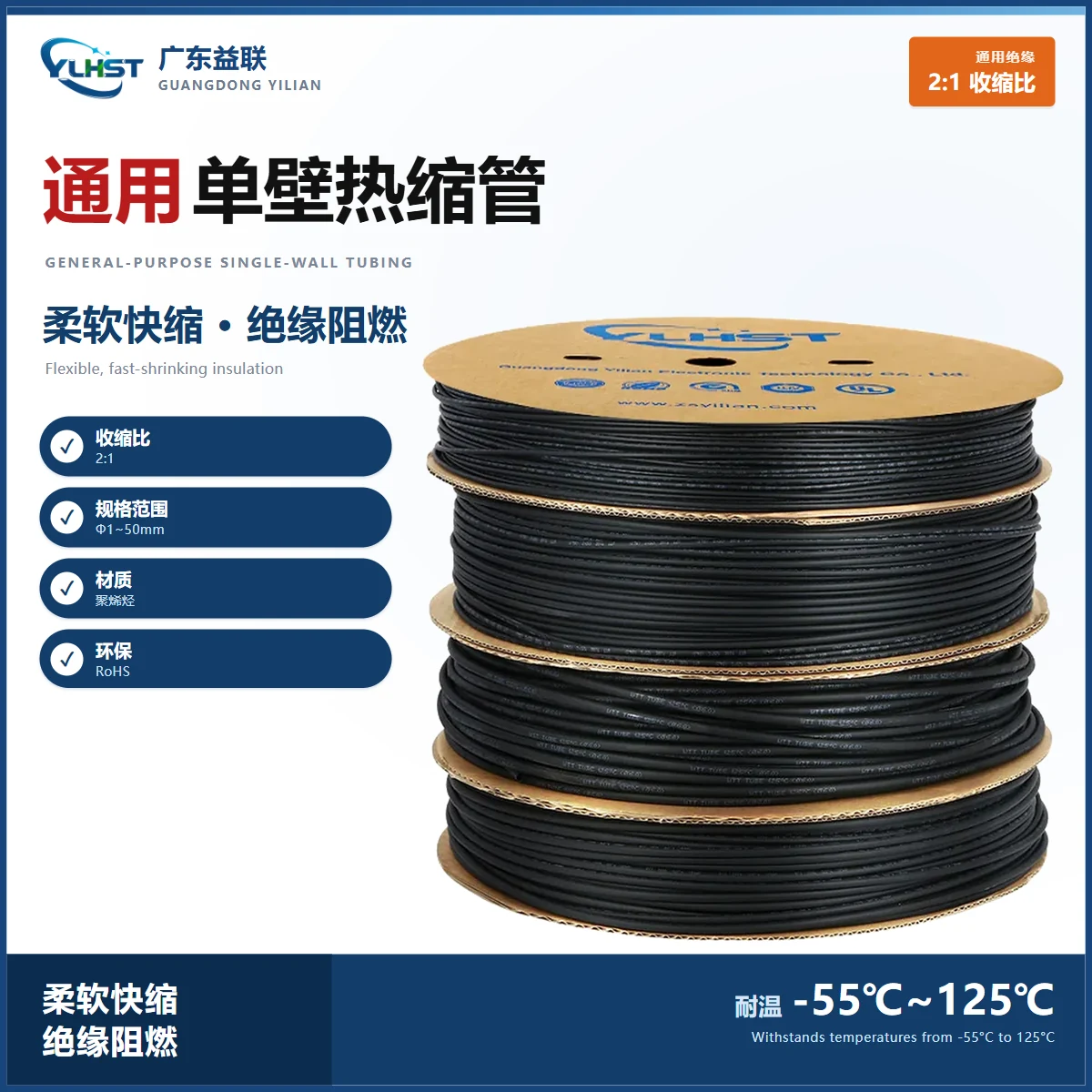
Working temperature is the range the tube may endure in continuous service once installed. Common polyolefin tubing is rated −55 °C to +125 °C, with higher-performance grades reaching 135 °C.
The important point is that it describes ambient or environmental temperature, not the heat applied during installation. A tube must hold its insulation and protection at −55 °C and at 125 °C, and neither number tells you how hot the gun should be.
The difference in one table
| Item | Shrink temperature | Working temperature |
|---|---|---|
| Definition | Heat that makes the tube recover during installation | Temperature allowed in continuous service |
| Life stage | Installation | Operation |
| Typical values | Starts about 70 °C, complete about 110 °C | Commonly −55 to +125 °C |
| Judged by | Complete recovery and tight contact | No ageing, stable performance over time |
| Set by | Compound, wall thickness, heating method | Material grade, service environment |
Four myths
A 125 °C rating means heating to 125 °C. The most common mistake. The rating is the service environment; full recovery of ordinary polyolefin happens around 110 °C. A hot-air gun is normally run at a 300–400 °C setting and moved continuously to avoid local overheating. The two numbers are unrelated.
A higher shrink temperature means better heat resistance. Shrink temperature follows from compound and process, not from the temperature class. Judge heat resistance by the working range.
A hair dryer will do. A household dryer delivers roughly 70–140 °C at the nozzle, which is too little to recover tubing quickly and evenly. The result is partial recovery or local blistering. Use a hot-air gun or an oven.
Longer heating is safer. Overheating ages the wall, discolours it and can scorch it, which reduces protection. Stop when recovery is complete and, on adhesive-lined parts, when the adhesive has flowed out.
Installation practice
Use a hot-air gun at a 300–400 °C setting, or an oven for large sizes. Move steadily from one end to the other so the tube heats evenly. On adhesive-lined tubing, keep heating briefly after the wall has recovered so the inner adhesive melts, flows and reaches the ends. Let the part cool naturally before moving it or applying load — moving a hot joint breaks the seal. Never use an open flame: it scorches the wall and degrades the material.
Quick answers
How do I know the tube is fully recovered? The wall sits tight with no wrinkles, an adhesive-lined part shows adhesive at both ends, and the sleeve cannot be rotated by hand once cool.
What about high-temperature environments? Standard polyolefin covers most industrial and electrical work at −55 to +125 °C. Above that, move to a fluoropolymer or fluororubber grade.
Can it be undone? No. Recovery is a one-way process, so confirm size and length before installation.
For a dual-wall example of the same logic, DWL-2 uses a polyolefin outer wall and a hot-melt inner wall, is flame retardant to 125 °C, shrinks 3:1 or 4:1 and is rated 600 V, which suits outdoor cable and automotive harness work.