
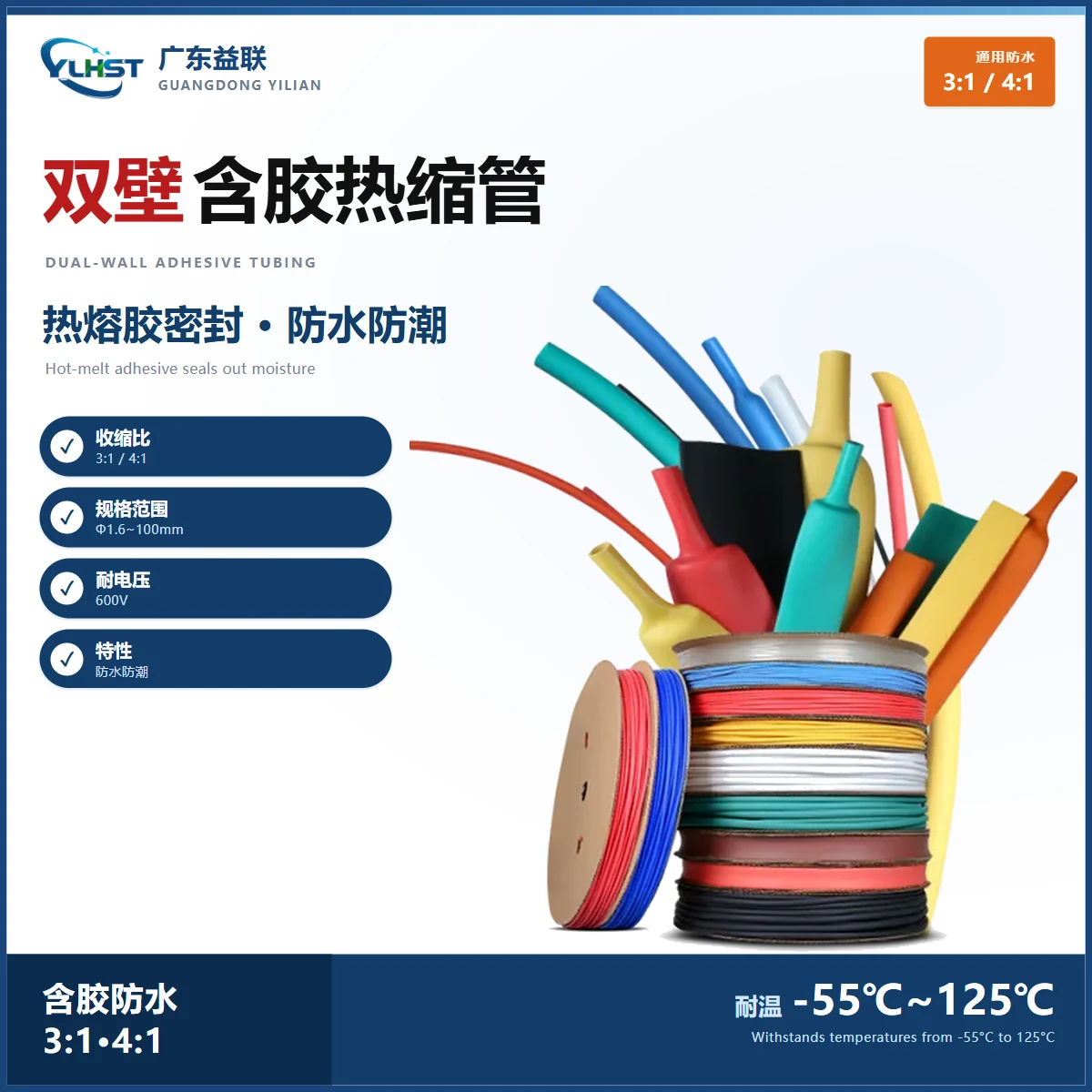
Send the same bill of materials to five suppliers and the quotes can come back 30 % apart. Most of the time nobody is misquoting: the enquiry itself carries too little information. Write only "Φ6 dual-wall heat-shrink, 135 °C" and each supplier prices the cheapest configuration that satisfies those words — wall thickness at the lower limit, a thin adhesive layer, a conventional shrink ratio. What comes back is a stack of prices, none of which can be matched against the drawing.
An RFQ only becomes comparable when it reads like an acceptance checklist. The fields below are the minimum set worth specifying before anyone quotes.
Name the material family first
Heat-shrink tubing divides by base material: polyolefin, PVDF, fluororubber, fluoropolymer, oil-resistant rubber. At the same nominal size the performance differs by an order of magnitude. Saying "irradiation cross-linked polyolefin", "oil-resistant rubber" or "PVDF" is far more useful than saying "high temperature". If the project is a replacement for an imported part, write the original part number too, so the supplier can propose against the right family rather than guess.
Three dimensions, not one
Expanded inside diameter, recovered inside diameter and recovered wall thickness — all three. With only an inside diameter, the supplier cannot judge the space you have available, and cannot show a wall-thickness difference in the price. Wall thickness is where the insulation margin lives, and thin wall versus thick wall is a large difference in material consumption, so it is a large difference in price.
Dual-wall tubing needs the adhesive layer specified separately
Every bit of sealing performance in adhesive-lined tubing comes from the inner hot-melt layer. Leave the adhesive thickness out and a supplier can satisfy the word "adhesive" with a very thin coat; after recovery there is not enough adhesive to fill a step or a gap, and the water resistance is nominal. Specify the adhesive thickness, the substrate it must bond to (PVC jacket, metal shell, rubber) and, where it matters, the test method for peel strength.
Two temperatures, not one upper limit
Continuous operating temperature and minimum full-recovery temperature are different things. The first is the service boundary, the second is the installation window. Give only "135 °C" and the supplier cannot tell whether you mean a temperature class or an installation temperature, and the process requirement will not appear in the price. For hot zones, add the transient peak and the contacting medium — oil, solvent and coolant all change the material choice substantially.
Acceptance standard and inspection documents
State the standard the parts must meet and which documents travel with the shipment: factory inspection report, specification approval sheet, material certificate, oil-resistance or heat-ageing test data. Do not ask for documents you will not use — a supplier will price them in. Conversely, anything left as "we will check on arrival" tends to become the item that blocks batch release.
Quantity, packaging and delivery terms
Beyond the total quantity, state whether delivery is in one lot or several, how many metres per reel, whether pre-cutting is required and whether marking is printed. Pre-cutting adds a processing charge but moves the harness shop's cut-off waste onto the supplier, which usually pays at standardised batch nodes. Separate stock from production lead time; they are not the same number in a quote.
| Field | What to write | What goes wrong if omitted |
|---|---|---|
| Material / grade family | Polyolefin, PVDF, fluororubber, oil-resistant rubber | Quoted on a low-grade compound; performance short |
| Expanded inside diameter | Nominal plus tolerance | Interference on assembly, or too loose |
| Recovered inside diameter | Maximum | Insufficient grip on the bundle |
| Recovered wall thickness | Minimum | Insulation margin silently reduced |
| Adhesive layer thickness | Mandatory for dual wall | Sealing exists only on paper |
| Continuous operating temperature | Long-term plus transient peak | Wrong temperature class selected |
| Media resistance | Specific oil, solvent or coolant | Swell and cracking in service |
| Standard and documents | Standard number plus report list | Batch release stalls |
| Quantity / packaging / delivery | Lot split, metres per reel, stock or production | Prices cannot be compared |
Read two more lines when comparing
Put quotes for the same specification side by side and check first whether a parameter sheet is attached, then the minimum order quantity, the permitted scrap allowance and the delivery commitment. The cheapest quote with missing parameters usually costs a second round of correspondence after arrival. For a localisation project, add the sample validation plan to the RFQ so the supplier understands it is not a one-off purchase.
Parameter tables for the two most common families are on the adhesive-lined dual-wall and YJDR150 oil-resistant product pages, or send the operating conditions to the YLHST engineering team and ask for a comparison sheet written against your duty.